


Echoes in the Age of Global Upheaval
In the contemporary world, the echoes of historical struggles are unmistakable. Popular uprisings, pro-democracy movements and anti-authoritarian protests have reverberated from the streets of Hong Kong to the squares of Kyiv. Ideals that once mobilized colonial subjects or citizens in absolutist Europe now inspire digital-age movements that challenge both local and global hierarchies.
This article seeks to explore the thematic threads that connect historical revolutions and civil wars to modern geopolitics, drawing on the works highlighted in our Promises Books Revolution and Civil War booklist as guides and interpretive lenses

"Ties of kinship and friendship held savagery back"

Blair Worden
All of our content is free to access. An independent magazine nonetheless requires investment, so if you take value from this article or any others, please consider sharing, subscribing to our mailing list or donating if you can. Your support is always gratefully received and will never be forgotten. To buy us a metaphorical coffee or two, please click this link.
Table of Contents
*All Book Images Open a New tab to our Bookshop
**If you buy books linked to our site, we get 10% commission from Bookshop.org, whose fees support independent bookshops.
Reflections on a Turbulent Past
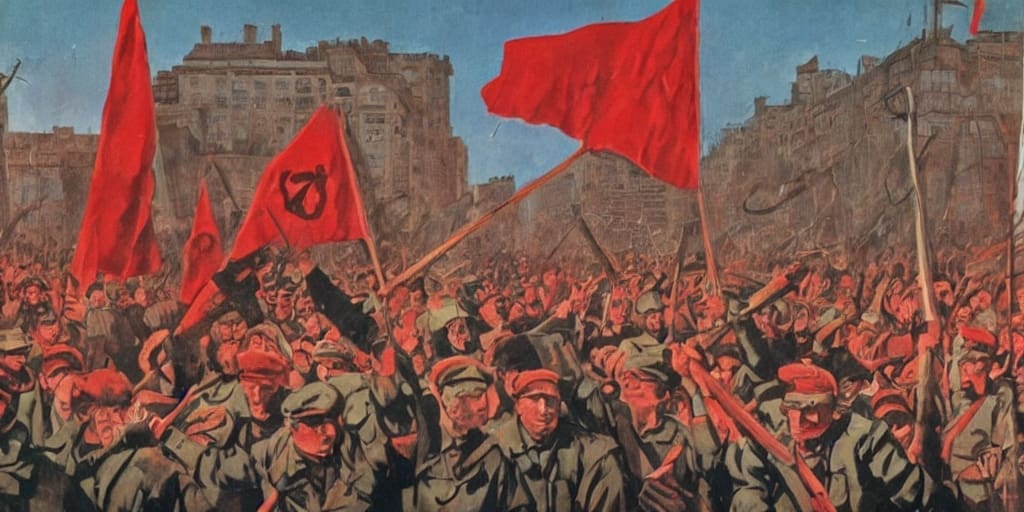
Revolutions and civil wars have always been the crucibles in which nations are forged and societies transformed. Across continents and centuries, these upheavals have reshaped boundaries, rewritten constitutions, and redefined the very meaning of freedom. The American and French Revolutions, the English Civil War, the Russian upheavals of the early twentieth century – they are more than events in dusty textbooks; they are enduring mirrors reflecting human aspiration, fear, and the ceaseless tension between ideals and power.
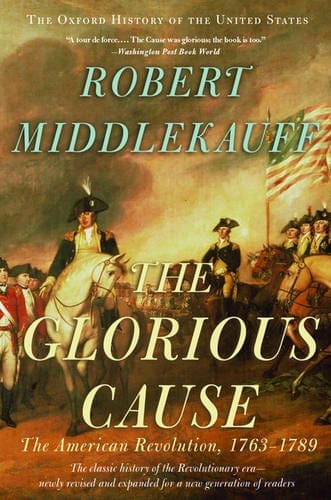
Robert Middlekauff observes in The Glorious Cause, the American Revolution was not only a struggle for independence but also an experiment in collective identity and governance. Its lessons remain pertinent today as populations around the world navigate the complexities of political participation, rights, and state legitimacy.
History, however, is never a simple ledger of victories and defeats. The French Revolution, as William Doyle highlights in The French Revolution: A Very Short Introduction, began with the clarion call for liberty, equality, and fraternity, yet its trajectory was marred by terror, factionalism, and eventual authoritarianism. These narratives reveal a central paradox of revolutionary change: the more fervent the idealism, the higher the risk that ideals will collide with reality.
It is messy, contradictory and often violent, but it also illuminates the pathways toward justice, equity, and reform.
The Nature of Revolution: Ideals vs. Realities
Revolution is often a language of hope spoken in the key of justice. Yet the translation of revolutionary ideals into political and social reality is rarely seamless. In the American Revolution, as Middlekauff reveals, the fight for independence was underpinned by a belief in natural rights and self-determination. Yet, this struggle for freedom coexisted with profound contradictions: the institution of slavery persisted, and indigenous peoples were systematically dispossessed. Similarly, Doyle’s exploration of the French Revolution underscores the tension between lofty egalitarian aspirations and the Reign of Terror that followed. Ideals, it seems, must contend with human frailty, factional disputes, and the practicalities of governance.
Contemporary revolutions reveal these same patterns. The Arab Spring exemplifies the duality of revolutionary fervour and structural constraints. In Tunisia, the initial optimism for democratic reform encountered the hard realities of economic instability and entrenched political networks. In Libya and Syria, the aspirations for popular sovereignty devolved into protracted civil conflict. These modern parallels underscore the enduring insight that revolutions are never purely moral dramas; they are complex negotiations between ideal, ambition, and the constraints imposed by society and geopolitics.
A theme threaded throughout our Revolution and Civil War booklist is the tension between mass mobilization and leadership. In the American colonies, charismatic figures like George Washington and Thomas Jefferson provided direction, yet the revolution also depended on the collective action of ordinary people. This interplay between leadership and grassroots participation finds echoes today in movements such as Ukraine’s Maidan protests, where civic engagement, social media and public assemblies converged to challenge entrenched authority.

Civil War: The Internal Struggle
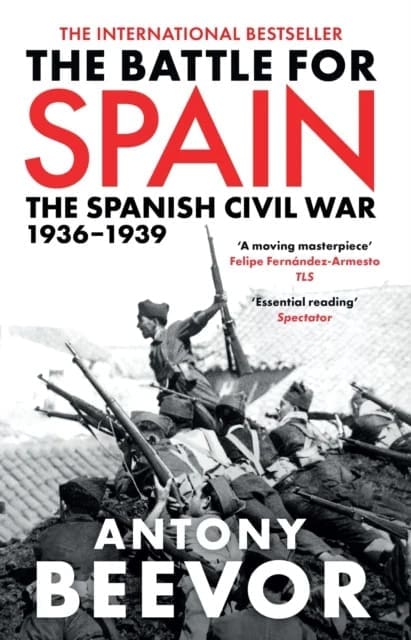
Civil war is the anatomy of a nation divided. Unlike revolutions that often target an external authority, civil wars pit citizen against citizen, ideology against ideology, within a single polity. Blair Worden’s The English Civil War emphasizes that internal divisions whether religious, political or social can transform governance crises into violent struggle. Beevor’s The Spanish Civil War similarly demonstrates how ideological polarization between fascism and republicanism, can ignite a conflict with consequences reverberating far beyond national borders.
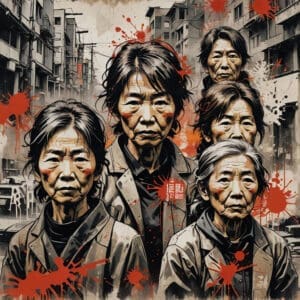
The human cost of civil wars is immense and enduring. Beyond the immediate devastation, such conflicts fracture societies, displace populations, and create cycles of vengeance and distrust. In Syria, the civil war has produced over 6 million internally displaced persons and millions of refugees, many seeking asylum across Europe. The war in Yemen has precipitated famine and cholera outbreaks, illustrating how internal conflict, if prolonged, extends its toll across borders. These contemporary crises reflect patterns noted in historical accounts: a nation riven by competing visions of identity, governance, and social justice is vulnerable to collapse and protracted human suffering.
Civil wars also illuminate the fragility of institutions. The collapse of Spain’s Second Republic underlines the ease with which polarized societies can dissolve into chaos when institutional checks fail. Similarly, in contemporary contexts, weak state apparatuses and factionalized political landscapes amplify the potential for sustained conflict. Historical reflection suggests that civil wars are not merely political events; they are societal stress tests, revealing the strengths and weaknesses of governance, civic cohesion and the capacity for reconciliation.
"The army overcame the worst in itself and in others"

Robert Middlekauff
Power and Authority: The Quest for Control
At the heart of every revolution and civil war lies the question: who holds power, and by what right? Machiavelli’s The Prince remains instructive: the acquisition and maintenance of power demand pragmatism, cunning and often, ruthlessness. Historical examples abound: Cromwell’s consolidation of power during the English Civil War, Napoleon’s centralization of authority post-French Revolution, and Stalin’s monopolization of power after the Russian Civil War. In each case, the tension between popular mandate and coercive authority shaped the trajectory of societies for generations.
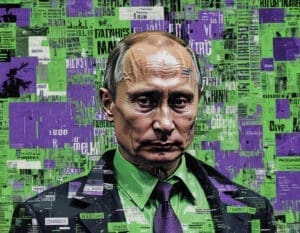
In contemporary geopolitics, this struggle persists. The annexation of Crimea by Russia, China’s assertive posture in the South China Sea, and authoritarian consolidation in nations like Turkey and Hungary exemplify modern power struggles that, while less visibly violent than historical civil wars, still operate under the same dynamics of authority, control, and legitimacy. The digital age adds complexity: propaganda, cyber interference and information warfare become instruments of power, illustrating that the battlefield of authority now extends beyond territory into narrative and perception.
Power is rarely static. Revolutions can invert hierarchies, yet often replace one form of authoritarianism with another. The French Revolution replaced monarchy with a republic that quickly succumbed to Napoleonic dictatorship; the Russian Revolution ousted the tsarist regime only to institute decades of totalitarian rule. History and modern experience converge on the insight that power is both fluid and corrosive: the consolidation of authority is necessary for governance but fraught with ethical and practical dilemmas.

Ideology and Identity: The Battle for Beliefs
Ideology and identity are central to understanding the forces that drive revolutions and civil wars. Marx and Engels’ The Communist Manifesto articulates the role of class struggle as a catalyst for societal transformation, framing history as a series of conflicts between the oppressed and the oppressor. Yet, as history shows, revolutions often involve multiple, intersecting ideologies: nationalism, republicanism, liberalism and socialism, each with its own vision of justice and social order.
Modern parallels abound. The ideological divide between liberal democracies and authoritarian regimes, the resurgence of nationalist movements, and the debates over identity politics all echo historical conflicts. Ukraine’s recent struggles, for example, cannot be separated from the ideological tensions between European integration and Russian influence, between civic nationalism and ethnic claims. Similarly, debates over populism and liberalism across Europe and the Americas reflect ongoing tensions over governance, cultural identity and social equity.
Ideology is not abstract; it shapes everyday life, laws, and expectations of citizenship. It informs who is included and who is excluded, whose voices are amplified and whose are silenced. From the civil wars chronicled by Beevor to the uprisings in Syria and Myanmar, ideology and identity provide both the spark for revolt and the framework within which societies reconstruct themselves after conflict.
"Stalin’s postwar goals were security… in that order"

John Lewis Gaddis
Justice and Legitimacy: The Moral Compass
Revolutionary and civil conflicts are as much moral as they are strategic. Rousseau’s The Social Contract emphasizes that political legitimacy arises from the consent of the governed, a principle that has guided modern democracy and continues to frame debates over governance and civil rights. Fanon’s The Wretched of the Earth expands the discussion, illustrating how colonization and oppression distort moral authority and make violent resistance appear not only justified but inevitable.
Contemporary movements echo these historical lessons. Black Lives Matter protests challenge institutional legitimacy and advocate for accountability in the face of systemic injustice. Pro-democracy movements in Hong Kong and Georgia insist upon the moral foundation of political authority.
The persistence of these struggles underscores a critical point: revolutions and civil wars are not merely battles for control, but for the legitimacy of governance itself. When citizens perceive injustice, the moral authority of a regime is contested, sometimes violently, reflecting a timeless tension between law, equity, and consent.
Social media amplifies both protest and state control
Resistance and Repression: The Cycle of Conflict
Resistance is rarely a linear journey. Every act of defiance invites counteraction, and repression often galvanizes further dissent. Fanon’s analysis of anti-colonial struggles demonstrates how cycles of oppression and insurgency can entrench violence while simultaneously producing a sense of collective purpose among the oppressed. Historical accounts of revolutions, from the English to the Russian, reveal similar dynamics: state repression begets insurgency and insurgency provokes harsher repression.
Modern examples abound. The suppression of Hong Kong protesters, the crackdown on Georgian demonstrators and the violent response to protests in Myanmar illustrate how the cycle of resistance and repression continues to shape contemporary political landscapes. Social media amplifies both protest and state control, making resistance more visible and repression more scrutinized, yet the fundamental dynamic remains the same as in centuries past.
Global Implications: The Ripple Effect
No revolution or civil war occurs in isolation. The Cold War, as John Lewis Gaddis notes in The Cold War: A New History, illustrates how ideological conflicts between superpowers generated proxy wars across continents. Today, the reverberations of internal conflict continue to affect international stability. The Syrian civil war, for example, triggered regional displacement, humanitarian crises and the spread of extremist ideologies, affecting neighbouring nations and global security.
Even seemingly localized conflicts have geopolitical consequences. The war in Ukraine demonstrates how internal resistance and external interference can combine to reshape international alliances, disrupt global economies, and influence strategic policy. History reminds us that local unrest can escalate into global concern, a lesson as relevant now as in the 19th and 20th centuries.
Cultural Memory and Historical Narrative
Revolutions and civil wars are also stories we tell ourselves. Literature, memoirs, and historical accounts shape collective memory, determining which narratives endure and which are forgotten. Authors chronicled in our Revolution and Civil War booklist, from Beevor to Doyle, illustrate how the historian’s pen mediates our understanding of conflict. Art and literature, too, preserve the emotional and psychological contours of these events, embedding them in national and global consciousness.
This cultural memory informs contemporary consciousness. Nations look to historical revolutions to justify or critique modern movements, drawing parallels to inspire action or caution restraint. The enduring influence of the Russian Revolution or the English Civil War on political theory, education and civic discourse illustrates how the past remains a lens through which we interpret the present.

Lessons for the Present
The study of revolutions and civil wars reveals patterns, principles, and paradoxes that resonate far beyond their historical moment. They illuminate the tension between ideals and reality, the fragility of legitimacy, and the cyclical nature of resistance and repression. They remind us that power, ideology, and identity are ever intertwined, shaping both the state and the citizen.
As we navigate contemporary upheavals, from Ukraine to Hong Kong, from civil unrest in the Middle East to ideological clashes in the West – the lessons of history remain indispensable. These conflicts underscore that change is rarely linear, that justice must be actively constructed and that the pursuit of freedom and equity requires vigilance, courage and reflection. Revolutions and civil wars, both past and present, are mirrors reflecting the perennial struggles of humanity: the struggle for dignity, representation, and a moral compass capable of guiding society through the turbulence of power.
In the end, the study of these conflicts is not merely academic. It is a guide, a warning, and a source of inspiration. It teaches that the forces shaping nations – be they idealism, ideology, or the pursuit of power – are as alive today as they were centuries ago. To understand them is to understand ourselves and the ongoing quest for a more just and equitable world.
Revolutions and civil wars have always been the crucibles in which nations are forged and societies transformed
Browse 4000+ Books in Our PromisesBooks Bookshop
































What do you think?